Multi-agent orchestration is the practice of coordinating several specialized AI agents so they work as one system on a business outcome, with an orchestrator deciding who runs when, what data moves between them, and when a human steps in. If 2023 to 2025 were the years of pilots and single-task assistants, 2026 is the year the conversation moved to orchestration: Gartner logged a 1,445% surge in client inquiries about multi-agent systems between early 2024 and mid-2025, and this year those inquiries are turning into production systems that read, route, draft, update records and trigger the next step across a business. This guide explains what orchestration actually is, what it looks like inside a real workflow, and how to adopt it without overbuilding.
TL;DR
One AI agent does a task; an orchestrated team of agents completes a workflow. A hub orchestrator hands work between specialist agents (intake, research, drafting, checking) and escalates to a human at defined checkpoints. It beats one do-everything agent on quality, but only makes sense once a single agent already works and the workflow keeps stalling at handoffs.
- The shift: from single-task assistants to coordinated agents that finish whole workflows
- Fastest wins: email and support triage, lead handling, quote and proposal drafting, finance admin
- The catches: cost per outcome, harder debugging, and governance across the whole fleet
- How to start: one workflow, two or three specialist agents, a human checkpoint, one measured metric
By the numbers
1,445%
surge in client inquiries about multi-agent systems from Q1 2024 to Q2 2025. Gartner
15%
of day-to-day work decisions are expected to be made autonomously by AI agents by 2028. Deloitte
$45B
potential agentic AI market by 2030 if orchestration challenges are solved, versus a $35B baseline. Deloitte
Industry figures are cited for context; outcomes vary by business and implementation.
From one agent to a team of them
A single agent hits a ceiling for the same reason a single employee does: one role cannot be excellent at everything. Ask one prompt to research a lead, judge its fit, write the outreach and log it in the CRM, and you get an agent that is mediocre at all four. The pattern that took over in 2026 mirrors how you would staff the work: specialist agents, each owning one narrow job it can be genuinely good at, and an orchestrator that coordinates them. This is the same lesson we give on first agents for small businesses, applied at the next level: narrow scope wins, and orchestration is how narrow agents add up to something big.
What an orchestrator actually does
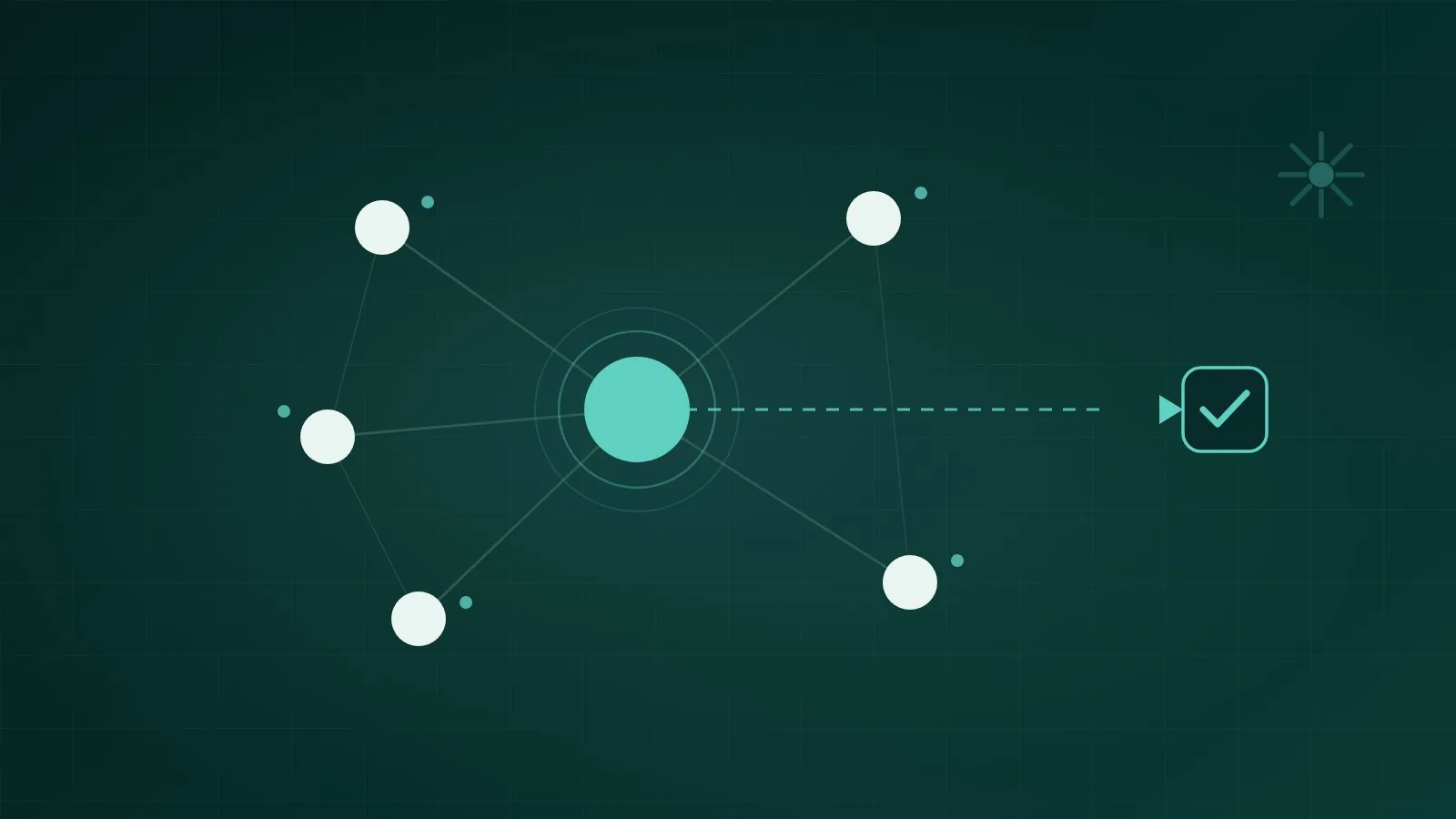
The orchestrator is the manager of the system, and its job is unglamorous but decisive. It sequences the work (which agent runs, in what order, and what can run in parallel), moves data between agents in a form the next one can use, applies shared rules and guardrails across the whole fleet, and decides when a case leaves the system and lands with a human. In practice most business systems use a hub pattern: one orchestrator, a handful of specialists, and explicit escalation paths.
What this looks like in a real business
Take inbound leads. Today a person reads the inquiry, looks the company up, decides if it is worth pursuing, writes a reply and updates the CRM, usually hours later. Orchestrated, an intake agent classifies the inquiry the minute it arrives, a research agent enriches it from your data and the web, a drafting agent writes a reply in your voice with a proposed next step, and a QA agent checks it against your pricing and policies before a human approves the send. The lead gets a considered answer in minutes, and the CRM updates itself. The same shape fits the areas where teams are seeing the fastest wins this year: support triage, quote and proposal drafting, invoice and finance admin, and back-office process automation. The through-line is that agents finish the workflow, not just their task.
The honest catches
- Cost per outcome: a workflow that makes dozens of model calls must be priced per completed outcome, and cheap models should handle the routine steps
- Debugging: when the output is wrong, the cause may be three handoffs upstream; you need logs that show what each agent saw and decided
- Governance: five agents sharing tools multiply the ways things can go wrong, which is why orchestration and agent governance arrived as the same conversation in 2026
- Premature complexity: the most common failure is orchestrating before a single agent works; a team of mediocre agents is just mediocrity at scale
How to start without overbuilding
Pick one workflow that already stalls at handoffs, and map it as you would for a new hire: steps, inputs, decision points, and where judgment is genuinely required. Start with two or three specialist agents and a human checkpoint before anything customer-visible or financial, then measure one metric (time to first response, cost per processed lead, hours saved) for a few weeks before adding a fourth agent. If your processes already run on workflow automation tools like the ones we compared in our Zapier vs Make vs n8n guide, you have a head start: those pipelines become the rails your agents run on, with the orchestrator supplying the judgment the rules could never encode.
Bottom line: multi-agent orchestration is how automation stops being a set of disconnected helpers and starts finishing whole workflows. Earn it the same way you would build a team: one proven specialist at a time, with a manager that knows when to call a human.
Frequently asked questions
What is multi-agent orchestration?
Multi-agent orchestration is the practice of coordinating several specialized AI agents so they work as one system on a business outcome. An orchestrator decides which agent runs when, what data passes between them, which decisions get handed off, and when a human needs to step in, so a whole workflow gets done rather than a single task.
How is multi-agent orchestration different from workflow automation?
Classic workflow automation follows fixed rules: if this trigger fires, do these steps. Orchestrated agents reason within guardrails instead: each agent interprets its input, decides how to do its job, and the orchestrator routes work based on what actually happened. Automation executes instructions; orchestration coordinates judgment. Most real systems combine both.
When should a business move from one AI agent to multiple?
Move to multiple agents only after one agent works and is measurably paying for itself. The signal is a workflow that keeps stalling at handoffs: the agent finishes its task but a person still has to carry the output to the next step. If a single prompt is being asked to research, decide, write and file all at once, splitting those into specialist agents usually raises quality.
What does multi-agent orchestration cost to run?
An orchestrated workflow makes many model calls per outcome, so the honest metric is cost per completed outcome, not cost per call. Well-designed systems route routine steps to small, cheap models and reserve powerful models for the hard steps, which keeps the total modest compared with the manual labor they replace. Measure it per workflow before scaling.